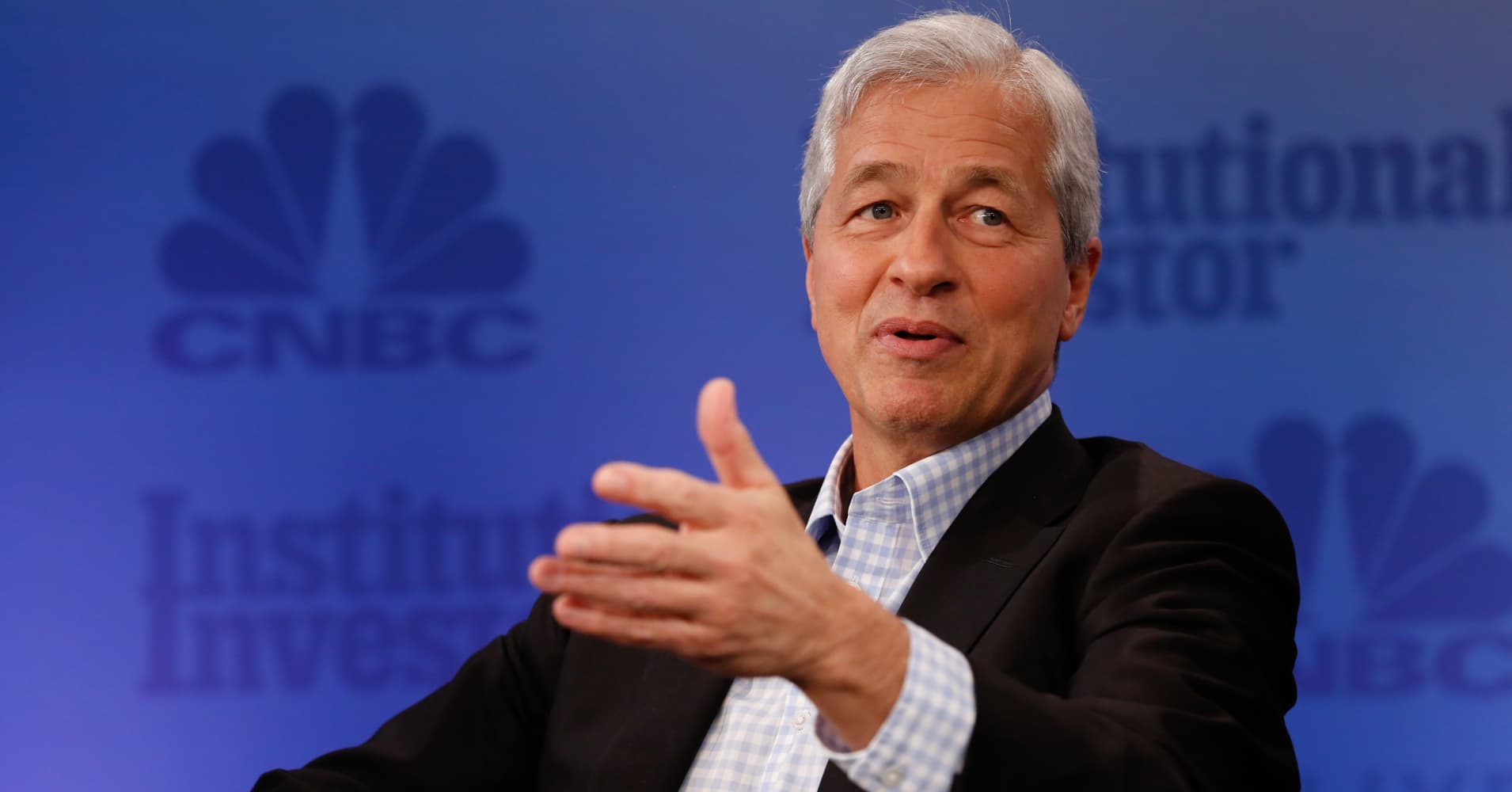
Dimon’s comments came after U.S. President Donald Trump decided to implement further tariffs on Chinese goods. On Monday, he announced a 10 percent tariff on $200 billion worth of Chinese imports. Those duties will rise to 25 percent at the end of the year.
In response, China announced tariffs targeting more than 5,000 U.S. products — worth about $60 billion — that will go into effect on September 24. The country has also filed acomplaint to the World Trade Organization (WTO) against the U.S.
Dimon said the tariffs would not have that many ramifications for the American consumer or economy.
“But if you look at tariffs on $200 billion (worth of Chinese goods), and this may all get passed on to American consumers and they have to pay another $20 billion (on Chinese imports), it’s a $20 trillion economy, so the actual economic effect is not dramatic,” Dimon said.
“We can add tariffs to more things and the Chinese can retaliate in other ways and I don’t think all that’s good. It’s not a devastating thing, it’s not a war, it’s a trade skirmish that can have negative economic effects.”
Trump appeared to leave the door open for negotiations with China, telling reporters during a visit with Poland’s president on Tuesday that the U.S. may make a deal with China at some point and that his country is always open to talking. Dimon said he didn’t expect any immediate resolution, however.
“There is an effect on the psyche, the mind, if the trade skirmish becomes a trade war but right now it’s just trade tit-for-tat and hopefully we’ll get to a resolution. I don’t expect a trade war but I also don’t expect any progress before (U.S. Mid-Term) elections.”
Dimon’s only worry about the trade tensions was whether it could “offset some of the positive effects” that he said had been seen from President Trump’s “regulatory reform and tax reform and other pro-business policies.”
from News Viral View https://ift.tt/2NZCYub
via IFTTT
0 comments:
Post a Comment